

Smart Entertainment: The Basics
Disclosure: Some links here are affiliate links. We may earn a commission at no extra cost to you. As an Amazon Associate, AutomateVerge earns from qualifying purchases. Read our affiliate disclosure.
Modern technology has completely changed how people enjoy entertainment at home. Instead of relying on traditional cable TV or standalone audio systems, homeowners can now connect multiple devices into one seamless smart entertainment ecosystem.
Whether you’re watching movies, listening to music, playing games, or controlling everything with your voice, offers convenience, better experiences, and greater flexibility.
This beginner’s guide explains what smart entertainment is, how it works, its essential components, benefits, and how you can create a smart entertainment system that fits your lifestyle.
What Is Smart Entertainment?
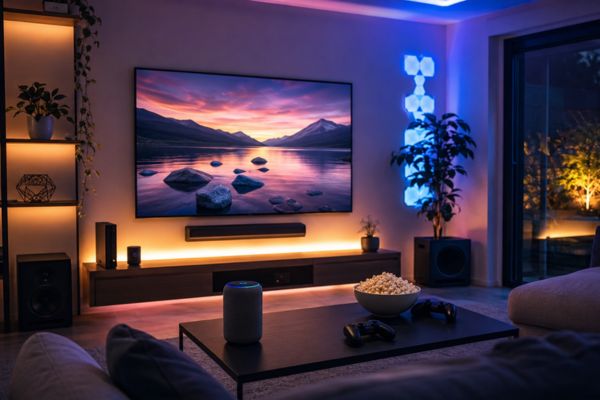
Smart entertainment refers to a connected system of devices that work together to provide movies, TV shows, music, games, and other digital content through the internet and home automation technology.
Unlike traditional entertainment systems, smart entertainment devices communicate with one another over your home network. Many devices can also be controlled using smartphone apps or voice commands.
Examples include:
- Smart TVs
- Streaming devices
- Smart speakers
- Voice assistants
- Wireless soundbars
- Gaming consoles
- Multi-room audio systems
Together, these devices create a more personalized and interactive entertainment experience.
How Smart Entertainment Works
A smart entertainment system connects devices through your home’s Wi-Fi or Ethernet network.
Most devices communicate using cloud services or local wireless protocols, allowing users to access content and control everything from a single interface.
A typical setup includes:
- Internet connection
- Smart TV
- Streaming device (optional)
- Voice assistant
- Wireless speakers
- Smartphone app
For example, saying:
“Play Stranger Things on Netflix.”
can automatically:
- Turn on the TV
- Launch Netflix
- Adjust the sound system
- Dim compatible smart lights
- Start playback
This level of automation creates a seamless viewing experience.
Essential Components of a Smart Entertainment System
Although every home setup is different, most smart entertainment systems include several key devices.
Smart TVs
A smart TV connects directly to the internet and comes with built-in streaming apps.
Popular features include:
- 4K and 8K resolution
- HDR support
- Voice control
- App stores
- Screen mirroring
- Streaming services
- Gaming features
Many smart TVs eliminate the need for external streaming devices.
Streaming Devices
Streaming devices transform almost any television into a smart TV.
Popular capabilities include:
- Streaming movies
- Live TV
- Music services
- Voice search
- Mobile casting
- AI recommendations
These devices often receive software updates faster than built-in TV operating systems.
Smart Speakers
Smart speakers provide hands-free control while delivering high-quality music.
Common uses include:
- Playing music
- Controlling entertainment devices
- Setting reminders
- Reading the news
- Listening to podcasts
- Multi-room audio
Many households place smart speakers in multiple rooms.
Voice Assistants
Voice assistants simplify the entire entertainment experience.
Instead of searching manually, users can simply ask:
- Play my favorite playlist.
- Pause the movie.
- Increase the volume.
- Skip this song.
- Open YouTube.
Voice assistants also connect entertainments devices with the rest of a smart home.
Smart Sound Systems
Modern audio systems provide immersive sound without complicated wiring.
Popular options include:
- Soundbars
- Wireless surround speakers
- Smart subwoofers
- Home theater systems
Many systems automatically optimize sound based on room acoustics.
Streaming Services
Streaming platforms have become the primary source of home entertainment.
Popular content includes:
- Movies
- TV series
- Live sports
- Music
- Podcasts
- Audiobooks
- Documentaries
Subscription services allow users to watch or listen on demand from multiple devices.
Gaming Integration
Gaming has become an important part of smart entertainment.
Modern gaming setups often include:
- Smart TVs
- High refresh rates
- Low input lag
- Cloud gaming
- Voice chat
- Wireless controllers
Many smart TVs now support gaming features without requiring additional hardware.
Benefits of Smart Entertainment
Easy Access to Content
Everything is available from one interface, reducing the need to switch between multiple devices.
Personalized Recommendations
Streaming platforms analyze viewing habits to recommend movies, TV shows, and music that match individual preferences.
Voice Control
Users can control entertainment without using multiple remote controls.
This improves convenience, especially for families.
Better Home Integration
Entertainment systems can interact with other smart home devices.
Examples include:
- Lights dimming automatically
- Curtains closing
- Thermostat adjusting
- Smart speakers synchronizing audio
Multi Room Entertainment
Many systems allow music to play across multiple rooms simultaneously.
Different rooms can also stream different content.
Wireless Convenience
Modern entertainment systems reduce cable clutter through Wi-Fi and Bluetooth connectivity.
This creates a cleaner and more organized living space.
Automatic Updates
Unlike traditional electronics, devices regularly receive software updates that introduce new features, improve security, and enhance performance over time.
Things to Consider Before Buying
Before building a smart entertainment system, evaluate the following factors.
Internet Speed
Streaming 4K content requires a reliable high-speed internet connection.
Slower connections may cause buffering or lower video quality.
Device Compatibility
Ensure all devices work together within the same ecosystem.
Compatibility between TVs, speakers, voice assistants, and streaming services helps avoid setup issues.
Audio Quality
Picture quality often receives the most attention, but sound plays an equally important role.
Adding a soundbar or surround speakers can significantly improve the viewing experience.
Smart Home Integration
If you already own smart lights, cameras, or thermostats, choose entertainment devices that integrate smoothly with your existing setup.
Privacy Settings
Many devices collect usage data to personalize recommendations. Privacy settings regularly and disable unnecessary permissions if desired.
Budget
Smart entertainment systems are available at various price points. You can begin with a smart TV and expand later by adding speakers, streaming devices, or smart lighting.
Future of Smart Entertainment
Smart entertainment continues to evolve rapidly.
Future innovations may include:
- AI-powered personalized viewing
- More immersive virtual reality experiences
- Advanced spatial audio
- Improved cloud gaming
- Faster streaming technologies
- Better smart home automation
- More energy-efficient devices
As internet speeds increase and artificial intelligence advances, entertainment systems will become even more intelligent and personalized.
Final Thoughts
Smart entertainment has transformed the way people enjoy movies, music, gaming, and television at home. By connecting smart TVs, streaming devices, speakers, and voice assistants, users gain a more convenient, personalized, and immersive entertainment experience.
Whether you’re starting with a single smart TV or building a complete home theater ecosystem, investing in compatible devices and a reliable internet connection will help you get the most from your setup. As technology continues to evolve, smart entertainment will become even more integrated, intelligent, and central to everyday life.