


Most homeowners think about home security in terms of locks, cameras, alarms, and smart doorbells.
But there are two devices that could matter even more when something goes seriously wrong.
They are probably sitting quietly on your ceiling right now: your smoke alarm and carbon monoxide (CO) detector.
And unlike a security camera, you don’t need to be watching them for them to protect you.
A fire can start while you are asleep. Carbon monoxide can build up while you are going about your normal day. You may not see either danger coming.
That is what makes these two threats so frightening.
According to the National Fire Protection Association, 60 percent of home fire deaths happen when smoke alarms don’t work correctly due to dead batteries or lack of periodic cleaning and testing. Another 38 percent happen in homes with no smoke alarm at all.
Carbon monoxide is even harder to detect because you cannot see it, smell it, or taste it. A person can be exposed without realizing anything is wrong until symptoms such as headache, dizziness, confusion, or nausea begin.
By then, getting everyone out of the house quickly may already be difficult.
The good news is that you do not need an expensive security system to protect your family from these dangers. A properly installed and maintained smoke alarm and CO detector can provide an early warning when you may have no other warning at all.
In this guide, we’ll look at why smoke and CO detectors matter, where they should go, how different detector types work, and whether a smart detector is worth considering
The Case for Smoke Detectors — Because Fire Moves Fast
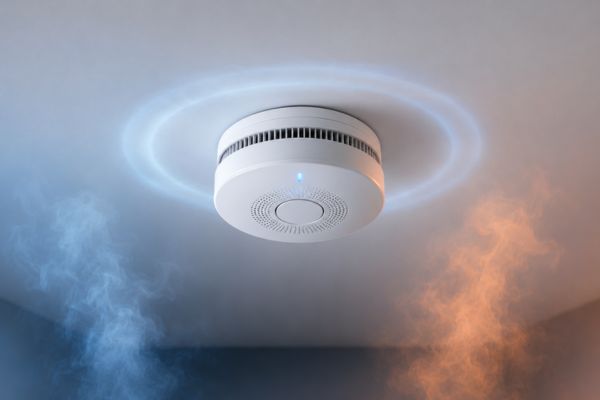
A smoke alarm can seem like one of those boring things you install and then forget about.
Until it goes off at 2 a.m.
A house fire does not wait for you to wake up, get dressed, and figure out what is happening. Smoke can spread through a home incredibly quickly, and people may have only a short amount of time to escape once a serious fire starts.
That is why early warning matters so much.
Homes with working smoke alarms have a much lower risk of death in a fire than homes without working alarms. In fact, the risk of dying in a reported home fire is about half in homes with working smoke alarms.
That makes a smoke alarm one of the simplest safety devices you can have in your home.
But There Is a Problem
Having a smoke alarm on the ceiling does not automatically make your home safe.
The alarm needs to work.
Dead batteries are an obvious problem. So are alarms that have been removed because they keep going off while someone is cooking.
Then there are alarms that are old, dirty, damaged, or simply forgotten.
Imagine waking up to the smell of smoke and reaching for the smoke alarm — only to discover that the battery was removed months ago.
That is a frightening situation that can often be prevented.
Test your alarms regularly. Keep them clean. Replace batteries when needed, unless the unit uses a sealed long-life battery. And remember that smoke alarms generally need to be replaced after about 10 years.
A smoke alarm only helps if it can actually wake you up when you need it.
The Case for CO Detectors, The Danger You Cannot See Coming
Fire gives you clues.
You might smell smoke. You might see flames. You might hear an alarm.
Carbon monoxide gives you none of that.
CO is a colorless, odorless gas produced when fuels such as gas, oil, wood, propane, kerosene, or charcoal do not burn completely.
It can build up inside a home without leaving an obvious warning.
And that is exactly why carbon monoxide is so dangerous.
Where Can Carbon Monoxide Come From?
You might think CO is only a problem in old houses or homes with faulty heating systems.
It isn’t.
Potential sources include:
- Gas furnaces and boilers — especially if they are poorly maintained or have ventilation problems
- Gas water heaters — another common source when something goes wrong with the system or venting
- Gas stoves and ovens — especially when used incorrectly or without proper ventilation
- Attached garages — a running vehicle can produce dangerous amounts of CO that may enter the home
- Fireplaces and wood stoves — blocked or damaged flues can allow CO to build up indoors
- Portable generators — extremely dangerous when used inside a home, basement, or attached garage
- Gas-powered equipment — including some pressure washers, lawn equipment, and other tools
Why Carbon Monoxide Is So Scary
Carbon monoxide is known as the invisible killer because it is an odorless, colorless gas. This means you have no natural sensory warning. By the time symptoms develop, the gas may have already reached concentrations where normal cognitive function is impaired making effective evacuation difficult.
CO symptoms at low concentrations headache, fatigue, mild nausea mimic common illnesses like the flu. Many CO poisoning victims don’t recognize what’s happening. Higher concentrations cause confusion, loss of consciousness, and death.
The winter risk is particularly acute: sealed homes, running furnaces, and confined spaces create the conditions where CO can accumulate to dangerous levels without any warning beyond a functioning detector.
CO Detection Is Legally Required in Most US States
As of 2026, the majority of US states require CO detectors in residential dwellings, particularly in homes with attached garages or fuel-burning appliances. Requirements vary by state some require detectors in every bedroom, others on each floor, others near sleeping areas only. Check your state’s specific requirements; in most cases the legal minimum is also the safety minimum.
Smoke Detector Types Ionization vs. Photoelectric vs. Dual Sensor
Not all smoke detectors detect smoke the same way. Understanding sensor types helps you choose the right detector for each location in your home.
Ionization Smoke Detectors
Ionization detectors use a small amount of radioactive material between two electrically charged plates. Smoke disrupts the ion current and triggers the alarm.
- Best at detecting: Fast-flaming fires with smaller combustion particles grease fires, paper fires, fires that spread quickly
- Known limitation: Slower to respond to slow-smoldering fires the type most common in residential bedroom fires, where materials like mattresses and upholstery smolder for extended periods before open flame develops
- Common issue: High false alarm rate from cooking ionization detectors are responsible for most kitchen false alarms, leading to the battery-removal behavior that creates dangerous gaps in coverage
Photoelectric Smoke Detectors
Photoelectric detectors use a light source and sensor. Smoke particles scatter the light beam and trigger the alarm.
- Best at detecting: Slow-smoldering fires the type most likely to develop during sleeping hours when materials burn without open flame
- Known limitation: Slightly slower response to fast flaming fires compared to ionization sensors
- Key advantage: The use of photoelectric smoke alarms is associated with a 25% reduction in fire deaths compared to ionization alarms primarily because they detect the slow smoldering residential fires that cause the most deaths, and because their lower false alarm rate means people are less likely to disable them
- Recommendation for most homes: Photoelectric sensors are the recommended type for bedrooms and living areas — they detect the most dangerous fire types and produce fewer cooking-related false alarms
Dual Sensor (Combination) Detectors
Dual sensor detectors combine both ionization and photoelectric sensors in one unit, providing the fastest detection across all fire types.
- Best at: Detecting both fast-flaming and slow smoldering fires
- Trade off: Higher price than single sensor models; some combination detectors weight one sensor type more heavily than the other check specifications
The Google Nest Protect uses a proprietary split-spectrum sensor that achieves similar results detecting both fire types with exceptional accuracy and extremely low false alarm rates.
CO Detection Technology
CO detectors use one of two primary sensing technologies:
- Electrochemical sensors: The most accurate and reliable technology for residential CO detection. Used in all premium detectors including Nest Protect, First Alert Onelink, and Kidde Smart. Recommended for all residential applications.
- Semiconductor sensors: Less expensive, less accurate, and more prone to false alarms from other gases. Found in budget combination units. Avoid for primary CO detection.
Where to Place Smoke and CO Detectors
Correct placement is as important as having a detector at all. An incorrectly placed detector may fail to alert in time or alert so frequently from normal household activities that residents disable it.
Smoke Detector Placement Rules
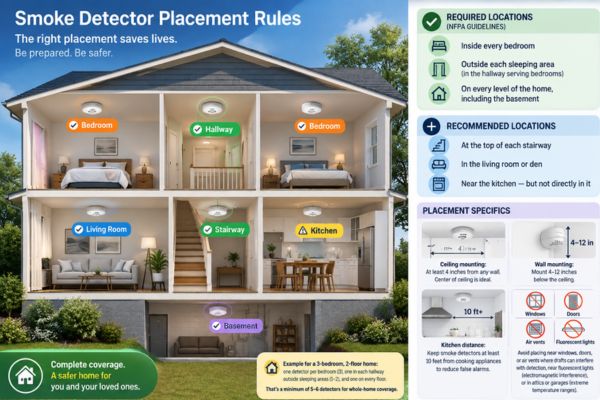
Required locations (NFPA guidelines):
- Inside every bedroom
- Outside each sleeping area (in the hallway serving bedrooms)
- On every level of the home, including the basement
Recommended additional locations:
- At the top of each stairway
- In the living room or den
- Near the kitchen but not directly in it (see below)
Placement specifics:
- Ceiling mounting: Mount at least 4 inches from any wall. Center of ceiling is ideal.
- Wall mounting: Mount 4–12 inches below the ceiling
- Kitchen distance: Keep smoke detectors at least 10 feet from cooking appliances to reduce false alarms. For kitchens where 10 feet isn’t achievable, use a photoelectric detector and set it to “hush” mode if available
- Avoid: Near windows, doors, or air vents where drafts can interfere with detection; near fluorescent lights (electromagnetic interference); in attics or garages (extreme temperature ranges)
For a typical 3-bedroom, 2-floor home: one detector per bedroom (3), one in each hallway outside sleeping areas (1–2), and one on every floor. That’s a minimum of 5–6 detectors for whole-home coverage.
CO Detector Placement Rules
CO rises and mixes with air it doesn’t settle near the floor or accumulate near the ceiling the way some gases do. This makes CO detector placement more flexible than smoke detector placement.
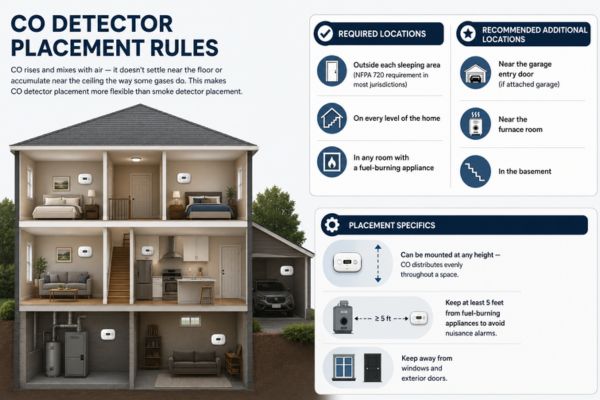
Required locations:
- Outside each sleeping area (NFPA 720 requirement in most jurisdictions)
- On every level of the home
- In any room with a fuel-burning appliance
Recommended additional locations:
- Near the garage entry door (if attached garage)
- Near the furnace room
- In the basement
Placement specifics:
- Can be mounted at any height — CO distributes evenly throughout a space
- Keep at least 5 feet from fuel-burning appliances to avoid nuisance alarms
- Keep away from windows and exterior doors
Combination Smoke + CO Detectors
Combination detectors handle both threats in one unit — which is why they’ve become the standard recommendation for whole-home coverage. Smart home integration with combination smoke and CO detectors is increasingly common, providing dual safety functions.
For most US households, combination detectors are the practical choice: they meet both smoke and CO placement requirements with a single device, simplify testing and maintenance, and in smart versions, provide unified app monitoring for both threats.
Smart Smoke and CO Detectors What They Add
A standard smoke or CO detector alarms when it detects a threat. A smart detector does considerably more and for many households, those additional capabilities are the difference between a useful warning and a life-saving one.
What Smart Detectors Do That Standard Detectors Can’t
A smart detector that does not connect to anything is still better than nothing but when you travel or spend time away from home, you get zero warning about problems until you walk back in. Smart smoke detectors fix that. An alert sent to your phone when you’re at work or traveling gives you the ability to act call a neighbor, contact emergency services, or check the camera feed before returning home.
Premium smart detectors (Nest Protect, First Alert Onelink) announce the location of the threat by room “There is smoke in the kitchen” rather than just a generic alarm tone. During an emergency, knowing which part of the house is affected determines evacuation route decisions.
A CO detection event can trigger your smart home to shut off the HVAC system (preventing CO from circulating through ducts), turn on all lights for evacuation visibility, unlock the front door, and send an alert to your security monitoring service all automatically, without anyone touching a device.
Smart detectors test themselves automatically eliminating the primary failure mode of standard detectors (dead batteries discovered too late). Monthly self-tests run silently in the background and report results to the app.
Instead of the 3am low battery chirp that leads to battery removal, smart detectors send low-battery notifications to your phone weeks in advance.
Interconnected smoke alarms can increase early warning time by up to 40% and improve survival rates by approximately 20% in multi-family buildings. Smart detectors achieve wireless interconnection via Wi-Fi or proprietary mesh when one alarms, all alarm without the hardwired interconnect required by traditional systems.
The Best Smart Smoke and CO Detectors
Best Overall: Google Nest Protect
The split-spectrum sensor is the Nest Protect’s defining feature it simultaneously measures both wavelengths of light scatter, allowing it to detect both fast-flaming and slow smoldering fires with a single sensor while filtering out steam, dust, and cooking smoke that trigger false alarms in standard detectors.The Nest Protect is the best smoke detector tested its split-spectrum sensor catches fires other detectors miss while virtually eliminating false alarms.
The split-spectrum sensor is the Nest Protect’s defining feature it simultaneously measures both wavelengths of light scatter, allowing it to detect both fast-flaming and slow-smoldering fires with a single sensor while filtering out steam, dust, and cooking smoke that trigger false alarms in standard detectors.
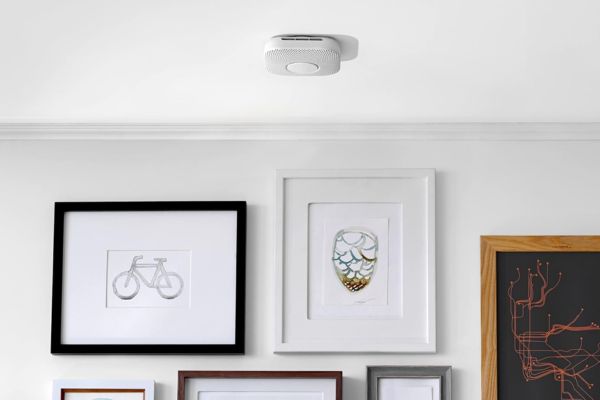
Price: ~$119
Best for: Google Home households; anyone wanting the most accurate detection with the lowest false alarm rate
Stay protected with Google Nest Protect. Detect smoke and CO, get smart alerts, and stay informed wherever you are!
Key features:
- Split-spectrum optical sensor (detects both fire types)
- Electrochemical CO sensor
- Room-specific voice alerts in English and Spanish
- Pathlight feature — doubles as a soft nightlight when you walk under it
- Wireless interconnect — all Nest Protects alarm together when one detects a threat
- Self-testing — automatic monthly tests with app reporting
- Google Home integration — triggers HVAC shutoff, lights on, smart lock coordination
- No subscription required for any feature
- Battery or hardwired versions available
Honest limitations: Google has discontinued the Nest Protect line. As of 2026, remaining inventory is still available through Amazon and Google Store but no new generation has been announced. Long-term support and app updates are uncertain.
No Apple HomeKit support. Alexa integration is basic (status check only).
Bottom line: Still the gold standard for detection accuracy and false alarm rejection. Buy it while available, particularly for Google Home households.
Best Google Home Replacement: First Alert SC5
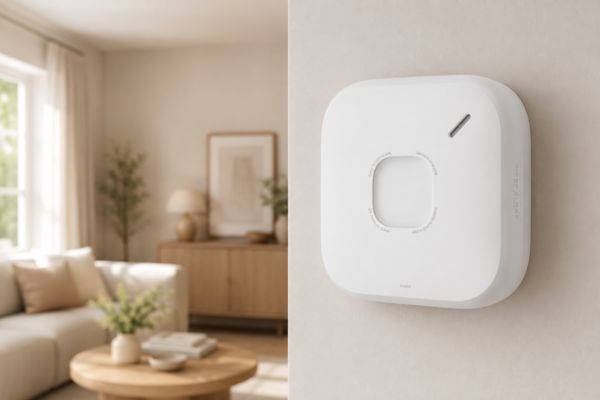
Price: ~$129
Best for: Households transitioning from Nest Protect; anyone wanting the best smart smoke+CO detector with ongoing manufacturer support
Stay protected Detect smoke and CO, get smart alerts, and stay informed wherever you are!
Key features:
- Photoelectric smoke sensor + electrochemical CO sensor
- Voice alerts with room location
- Phone push notifications via First Alert app
- Google Home integration
- Wireless interconnection with other First Alert devices
- 10-year sealed battery option (no replacement for a decade)
- No subscription required
Honest limitations: First Alert SC5 offers official Google Home compatibility but disappointing detection quality compared to the Nest Protect. The single photoelectric sensor doesn’t match the Nest’s split-spectrum accuracy. Worth considering as a practical alternative given Nest’s discontinuation.
Best for Multi Platform Households: Kidde Smart Smoke + CO Detector
Kidde is the only option that plays nicely with all three major platforms Alexa, Google Home, and Apple Home. If you have a mixed ecosystem, Kidde is your safest bet for compatibility.
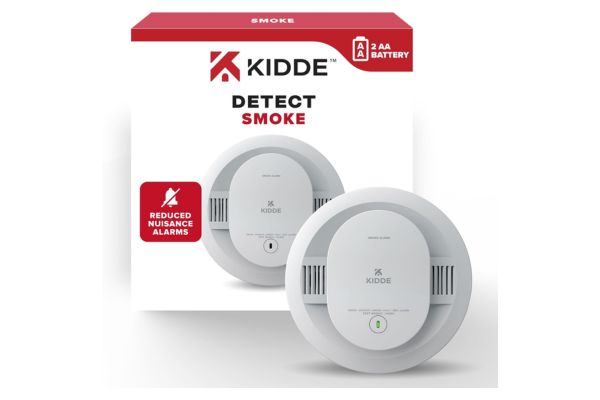
Price: ~$50–$70
Best for: Households with mixed ecosystems (Alexa + Google + HomeKit); apartment renters; budget-conscious buyers wanting smart features
Stay protected, Detect smoke and CO, get smart alerts, and stay informed wherever you are!
Key features:
- Photoelectric smoke + electrochemical CO sensor
- Wi-Fi connected (no hub required)
- Works with Alexa, Google Home, and Apple HomeKit
- Push notifications via Kidde app
- Battery powered installs anywhere, no wiring
- Dual-sensor option available (ionization + photoelectric)
- No subscription required
Honest limitations: The app is functional but basic — no detailed event history, no air quality monitoring. Detection quality is good but not at Nest Protect’s level. Works on 2.4GHz Wi-Fi only — check your router settings before purchasing.
Bottom line: The practical choice for mixed-ecosystem homes and renters. At half the Nest’s price with cross-platform compatibility, it covers the bases for most households.
Best for Apple HomeKit: First Alert Onelink Safe & Sound
If you’re building around Apple Home and want native HomeKit automations, the First Alert Onelink is the natural choice. It’s one of the few smoke detectors with native HomeKit support meaning smoke detection can trigger your entire HomeKit home: lights on, front door unlocked, HVAC off, notification to all household members.
It also does something none of the other detectors on this list do: the First Alert Onelink Safe & Sound has a full Amazon Alexa speaker built in. It functions as a ceiling-mounted Echo device voice commands, music, news, smart home control in addition to smoke and CO detection.
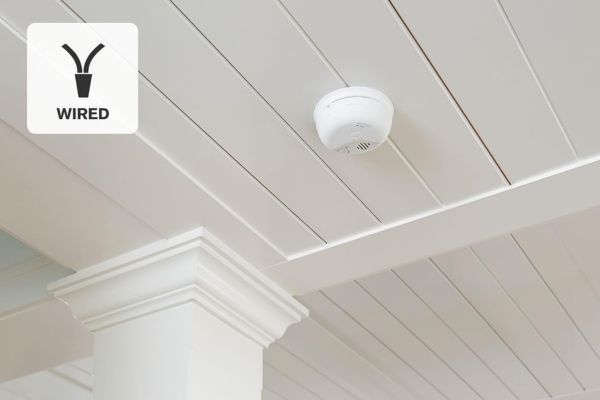
Price: ~$100
Best for: Apple HomeKit households; anyone wanting HomeKit automations triggered by smoke or CO detection
Stay protected, Detect smoke and CO, get smart alerts, and stay informed wherever you are!
Key features:
- Photoelectric smoke + electrochemical CO sensor
- Native Apple HomeKit support
- Built-in Amazon Alexa speaker
- Room-specific voice alerts
- 10-year sealed battery option
- 85dB alarm — one of the loudest on this list
- No subscription required for detection features
Honest limitations: First Alert’s app has had reliability issues push notifications sometimes arrive 30–60 seconds delayed, which partially defeats the purpose of a smart detector. The HomeKit integration is rock-solid; the app is the weak link. Hardwired installation required (no battery-only version).
Best Budget Smart Detector: Kidde Worry-Free + RemoteLync
For households where the premium smart detector price is a barrier, the combination of a Kidde 10-Year Worry-Free detector (~$20, 10-year sealed battery, no Wi-Fi) and a Kidde RemoteLync Monitor (~$40, cellular connectivity, sends alerts even without Wi-Fi) provides cost-effective smart monitoring.
The Kidde RemoteLync Monitor uses cellular connectivity instead of Wi-Fi — it keeps sending alerts even when your internet is down or your router is knocked out by a fire. For vacation homes and rental properties where internet reliability can’t be guaranteed, cellular connectivity is a meaningful advantage.
Price: ~$20-$40
Best for: Budget households; rental properties; vacation homes; adding basic smart monitoring without full smart detector cost
Stay protected, Detect smoke and CO, get smart alerts, and stay informed wherever you are!
Placement by Detector Type Quick Reference
Smoke and CO Detector Maintenance The Most Overlooked Safety Step
What to Look for When Buying Smoke and CO Detectors
Key Buying Criteria
- UL certification: Every smoke and CO detector sold in the US should carry UL (Underwriters Laboratories) certification UL 217 for smoke detectors and UL 2034 for CO detectors. This is non-negotiable. Recently recalled combination detectors failed specifically because they didn’t meet UL 217 standards. Buy from established brands (Nest, First Alert, Kidde) and verify UL marking on the product.
- Sensor type for smoke: Photoelectric for bedrooms and living areas. Dual-sensor (photoelectric + ionization) for whole-home coverage if budget allows.
- Sensor type for CO: Electrochemical only. Avoid semiconductor CO sensors.
- Battery type: 10-year sealed batteries are becoming the legal standard in California and New York and are strongly recommended nationwide. They eliminate the battery replacement failure mode entirely.
- Hardwired vs. battery: Hardwired detectors with battery backup are the most reliable configuration they operate continuously regardless of battery status and interconnect through the home’s wiring. Battery-only detectors are appropriate for renters and for locations where wiring isn’t accessible.
- Interconnection: Interconnected smoke alarms increase early warning time by up to 40%. For whole-home protection, all detectors should alarm together when one detects a threat. Smart detectors achieve this wirelessly; hardwired systems use the interconnect wire.
- Subscription requirements: Most smart detectors (Nest Protect, First Alert Onelink, Kidde Smart) deliver push notifications and app access for free with no subscription. Ring Alarm Smoke Listener requires a Ring Protect subscription for professional monitoring. Verify subscription terms before purchasing.
Frequently Asked Questions
Yes. They detect different threats and neither substitutes for the other. Smoke detectors detect combustion particles from fires. CO detectors detect carbon monoxide gas from incomplete combustion. A smoke detector will not alert to CO, and a CO detector will not alert to smoke. Combination smoke+CO detectors (a single unit detecting both) are available and are the recommended solution for most households they meet both requirements with one device.
The NFPA minimum for smoke detectors: inside every bedroom, outside each sleeping area, and on every level of the home. For a typical 3-bedroom home, that’s a minimum of 5-6 detectors. For CO detectors: outside each sleeping area and on every level. A combination smoke+CO detector in each of these locations meets both requirements simultaneously.
Yes. Battery powered CO and smoke+CO combination detectors install with two screws or adhesive no electrical work required. Hardwired detectors require connection to your home’s electrical system and are typically installed by an electrician if you’re not comfortable with basic electrical work.
Immediately evacuate all occupants (including pets) to fresh air outside the home. Call 911 from outside. Do not re-enter until emergency responders have cleared the home and identified and resolved the CO source. Do not ignore a CO alarm or assume it’s a false alarm CO is undetectable without a functioning detector.
Avoid placing smoke detectors directly in the kitchen (high false alarm rate from cooking), in attics or garages (extreme temperature ranges affect sensor reliability), near windows or exterior doors (drafts interfere with detection), and near bathroom doors (steam from showers causes false alarms). Keep detectors at least 3 feet from air supply vents.
Most detectors have a lifespan of 8-10 years. Check the manufacture date on the label inside or on the back of the unit. If the date is older than 10 years, replace it regardless of apparent function sensor sensitivity degrades over time even in detectors that still produce an alarm when tested. Most smart detectors also send end-of-life notifications through their app.
The Bottom Line Your Most Important Home Safety Investment
Locks and cameras protect you from other people. Smoke and CO detectors protect you from the threats most likely to kill you at home.
The risk of dying in a home fire is reduced by half in working-smoke-alarm homes. CO detection prevents hundreds of deaths and over 100,000 emergency room visits every year. No smart home security system no matter how sophisticated compensates for missing or non-functioning smoke and CO detectors.
What to do this week:
- Count your detectors — verify you have at least one smoke detector inside every bedroom, outside each sleeping area, and on every level
- Test every detector — press the test button; replace any that don’t alarm immediately
- Check manufacture dates — replace any detector older than 10 years
- Verify CO coverage — confirm you have CO detection outside every sleeping area and near any fuel-burning appliances
- Consider upgrading to smart detectors — phone alerts when you’re away from home close the largest gap in standard detector coverage
Our top smart detector picks:
- Best overall: Google Nest Protect split spectrum detection, room specific voice alerts, Google Home integration
- Best multi-platform: Kidde Smart Smoke + CO works with Alexa, Google Home, and HomeKit
- Best for Apple HomeKit: First Alert Onelink Safe & Sound native HomeKit + built-in Alexa
- Best no frills budget: Kidde 10-Year Worry-Free 10 year sealed battery, no subscription, no complexity
Best Smart Home Security Kits: Top Systems for Every Home and Budget
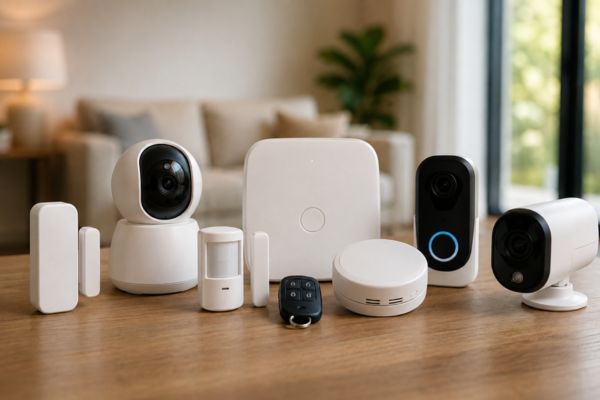
A smart home security kit is the fastest way to go from zero protection to a fully monitored home everything…
Why Smoke and CO Detectors Are Essential for Home Safety (And How to Choose the Right Ones)

Most homeowners think about home security in terms of locks, cameras, alarms, and smart doorbells. But there are two devices…
Best Smart Cameras for Home Security: Top Picks for Every Home
Discover the best smart cameras for home security compare top models with features, pricing, and compatibility for peace of mind.
Best Smart Locks for Apartments : No-Drill Picks
Apartment living creates a unique smart lock problem. You can’t replace the deadbolt your landlord owns it. You can’t drill…
Google Nest Cam Review 2026: Is It Worth the Price?
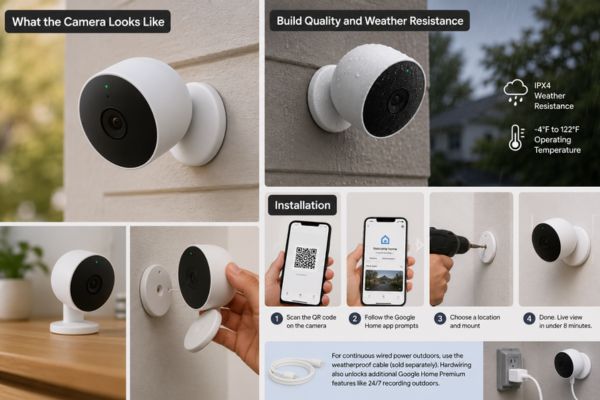
Most security cameras tell you something is happening outside your home. The Google Nest Cam tells you who is happening.…