
Best Voice Assistants for Smart Homes
Disclosure: Some links here are affiliate links. We may earn a commission at no extra cost to you. As an Amazon Associate, AutomateVerge earns from qualifying purchases. Read our affiliate disclosure.
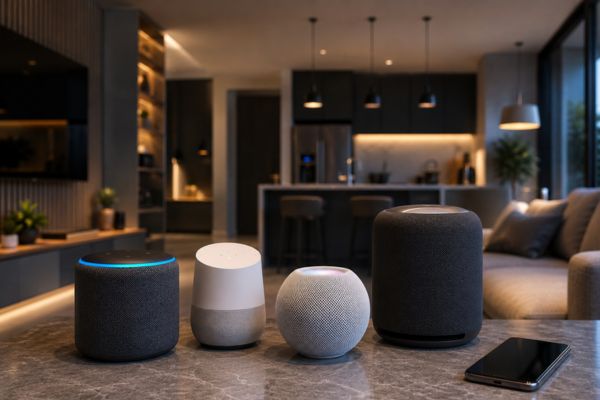
Voice assistants have become the heart of modern smart homes, allowing homeowners to control lights, thermostats, security systems, entertainment devices, and appliances using simple voice commands. As artificial intelligence continues to evolve, these assistants have become smarter, faster, and more capable of understanding natural language.
Whether you’re building your first smart home or upgrading your existing setup, choosing the right voice assistant is one of the most important decisions you’ll make. Each platform offers unique strengths, device compatibility, and ecosystem advantages that can significantly impact your daily experience.
This guide compares the best voice assistants for smart homes, helping you determine which one best fits your lifestyle and connected devices.
What Is a Smart Home Voice Assistant?
A smart home voice assistant is an AI powered virtual assistant that responds to spoken commands and controls compatible smart devices. Instead of manually opening apps or pressing buttons, users simply speak commands to perform tasks throughout the home.
Modern voice assistants can:
- Turn lights on or off
- Adjust thermostats
- Lock and unlock doors
- View security cameras
- Control smart TVs
- Play music
- Set reminders
- Answer questions
- Create automation routines
- Manage shopping lists
Most voice assistants are available through smart speakers, smartphones, smart displays, tablets, and even vehicles.
Why You Need a Voice Assistant
A voice assistant does much more than answer questions. It acts as the central hub for your connected home, making daily routines more convenient and efficient.
Some key benefits include:
- Hands-free control while cooking or cleaning
- Faster access to information
- Improved home automation
- Better energy management
- Enhanced home security
- Personalized routines
- Multi-room entertainment
- Accessibility for seniors and people with disabilities
With support for the Matter smart home standard becoming more widespread, voice assistants can now control a broader range of devices from different manufacturers.
Best Voice Assistants for Smart Homes
1. Amazon Alexa
Amazon Alexa remains one of the most popular voice assistants thanks to its extensive smart home compatibility and powerful automation features.
Alexa supports thousands of smart home products, including lighting, thermostats, locks, cameras, smart plugs, and appliances from hundreds of manufacturers.
Key Features
- Extensive smart home compatibility
- Powerful automation routines
- Multi-room audio
- Voice shopping
- Drop In intercom feature
- Smart home groups
- Matter support
- Zigbee hub support on selected Echo devices
Alexa excels at creating routines that automate multiple devices with a single command. For example, saying “Good Night” can turn off lights, lock doors, lower the thermostat, and activate security cameras simultaneously.
Pros
- Largest smart home ecosystem
- Excellent automation capabilities
- Supports thousands of devices
- Easy setup
- Frequent feature updates
Cons
- Some advanced features require subscriptions
- Privacy concerns for some users
- Shopping recommendations may not appeal to everyone
Best For
Alexa is ideal for homeowners with many smart devices from different brands who want maximum compatibility and advanced automation.
2. Google Assistant
Google Assistant is widely recognized for its exceptional natural language understanding and powerful search capabilities.
Unlike many competitors, Google Assistant can answer complex questions and maintain conversational context more naturally.
Key Features
- Superior voice recognition
- Google Search integration
- Calendar synchronization
- Google Maps integration
- Smart routines
- Broadcast feature
- Multi-user voice recognition
- Matter compatibility
Google Assistant integrates seamlessly with Android smartphones, Google Nest speakers, Nest Hub displays, and Chromecast devices.
It also works with thousands of smart home products, making it an excellent choice for users invested in Google’s ecosystem.
Pros
- Best conversational AI
- Outstanding search results
- Excellent speech recognition
- Strong Android integration
- Easy smart home setup
Cons
- Automation options are slightly less advanced than Alexa
- Limited support for some regional services
Best For
Google Assistant is perfect for Android users and homeowners who frequently rely on Google services like Gmail, Google Calendar, and Google Maps.
3. Apple Siri
Apple Siri is designed primarily for users who own Apple devices and use the Apple Home ecosystem.
Although Siri supports fewer smart home devices than Alexa or Google Assistant, it offers outstanding privacy protections and seamless integration with Apple products.
Key Features
- Apple Home integration
- HomePod support
- HomeKit Secure Video
- Strong privacy controls
- Automation scenes
- Intercom
- Multi-device synchronization
- Matter support
Apple’s Home app provides an intuitive interface for managing compatible smart home devices.
Users can create scenes such as:
- Good Morning
- Leaving Home
- Movie Night
- Good Night
These scenes control multiple devices simultaneously with a single voice command.
Pros
- Excellent privacy
- Smooth Apple ecosystem integration
- Reliable automation
- Simple user interface
- Secure HomeKit platform
Cons
- Smaller compatible device ecosystem
- Best experience requires Apple devices
- Less flexible than Alexa
Best For
Siri is the ideal choice for users who own an iPhone, iPad, Apple Watch, Mac, or HomePod and want a secure, privacy-focused smart home experience.
4. Samsung Bixby
Samsung Bixby is deeply integrated into Samsung smartphones, TVs, refrigerators, washing machines, and the SmartThings platform.
While it has a smaller ecosystem than Alexa or Google Assistant, Bixby performs exceptionally well within Samsung-powered homes.
Key Features
- SmartThings integration
- Samsung appliance control
- Smart TV control
- Device routines
- Voice automation
- Multi-device synchronization
Pros
- Excellent Samsung integration
- Great appliance control
- Easy SmartThings automation
Cons
- Limited third-party compatibility
- Smaller developer ecosystem
- Less capable general AI
Best For
Samsung users who already own SmartThings-compatible appliances and electronics.
Voice Assistant Comparison
| Feature | Alexa | Google Assistant | Siri | Bixby |
|---|---|---|---|---|
| Smart Home Compatibility | ⭐⭐⭐⭐⭐ | ⭐⭐⭐⭐☆ | ⭐⭐⭐⭐ | ⭐⭐⭐ |
| Voice Recognition | ⭐⭐⭐⭐☆ | ⭐⭐⭐⭐⭐ | ⭐⭐⭐⭐ | ⭐⭐⭐⭐ |
| Automation | ⭐⭐⭐⭐⭐ | ⭐⭐⭐⭐ | ⭐⭐⭐⭐ | ⭐⭐⭐ |
| Privacy | ⭐⭐⭐ | ⭐⭐⭐⭐ | ⭐⭐⭐⭐⭐ | ⭐⭐⭐⭐ |
| Ecosystem | Amazon | Apple | Samsung | |
| Matter Support | ✅ | ✅ | ✅ | ✅ |
Which Voice Assistant Is Best?
Amazon Alexa Is Ideal If:
- You have many smart home devices.
- You want advanced automation.
- You need broad compatibility.
- You enjoy customizable routines.
Google Assistant Works Best When:
- You use Android.
- You rely on Google services.
- You want the best voice recognition.
- You ask lots of questions.
Siri Is the Right Choice If:
- You own Apple devices.
- Privacy is your top priority.
- You use Apple Home.
- You prefer a simple ecosystem.
Samsung Bixby Is Worth Considering If:
- You own Samsung appliances.
- You use SmartThings.
- Your home is built around Samsung products.
Tips for Choosing the Right Voice Assistant
Before making your decision, consider the following factors:
- Existing smartphone ecosystem
- Smart device compatibility
- Privacy preferences
- Automation needs
- Budget
- Family members’ devices
- Support for Matter-enabled products
Choosing an assistant that matches your existing ecosystem often provides the smoothest experience.
Frequently Asked Questions
Which voice assistant is the smartest?
Google Assistant generally provides the best conversational AI and search capabilities, while Alexa excels in smart home automation.
Is Alexa better than Google Assistant?
Alexa offers broader smart home compatibility and stronger automation features, whereas Google Assistant provides more accurate answers and better natural language understanding.
Can Siri control smart home devices?
Yes. Siri works with Apple Home-compatible devices and supports Matter-enabled accessories for expanded compatibility.
Do voice assistants require WiFi?
Yes. Most voice assistants rely on an internet connection to process voice commands and communicate with cloud-based services.
What is Matter?
Matter is a universal smart home standard that improves compatibility between devices from different manufacturers, making it easier to build a connected home regardless of brand.
Conclusion
Choosing the best voice assistant for your smart home depends largely on the devices you already own and the ecosystem you prefer. Amazon Alexa stands out for its extensive smart home compatibility and advanced automation, making it an excellent choice for users with diverse connected devices. Google Assistant excels in conversational AI and integrates seamlessly with Android and Google services, while Apple Siri prioritizes privacy and works best within the Apple ecosystem. Samsung Bixby, meanwhile, offers deep integration for Samsung device owners through the SmartThings platform.
As Matter continues to improve cross-brand compatibility, today’s leading voice assistants are becoming more flexible than ever. By selecting an assistant that aligns with your lifestyle, preferred devices, and automation needs, you can create a smarter, more convenient, and future-ready home.