
Best Smart Thermostats 2026: Top Picks to Save Energy & Money
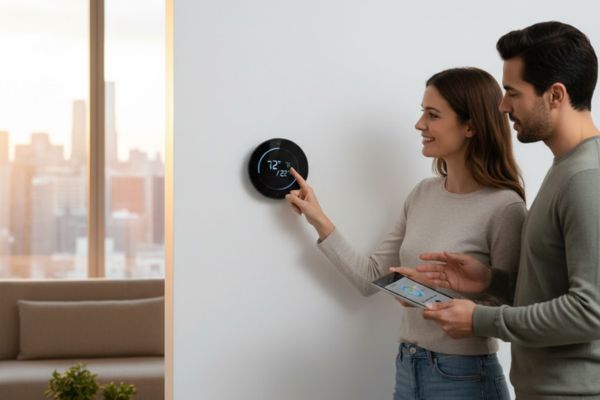
If your energy bill made you wince again this month, you’re not alone. Between unpredictable weather patterns, rising utility rates, and the push for greener living, more homeowners are asking the same question: “How can I stay comfortable without wasting money of Best smart thermostats?”
The answer, surprisingly, might already be hanging on your wall your thermostat.
In 2026, smart thermostats have evolved from simple gadgets into intelligent climate companions. They don’t just control temperature; they learn your habits, adjust automatically, and help you save money without you lifting a finger. Whether you’re a tech enthusiast who loves voice commands or someone simply tired of fiddling with the temperature every day, a smart thermostat can make your home both smarter and more efficient.
🌡️ The Smart Thermostat Revolution
Over the last decade, home automation has taken a giant leap. What used to be niche tech smart locks, connected bulbs, automated blinds has now become mainstream. At the center of it all is the thermostat, quietly bridging comfort and efficiency.
But 2026 isn’t just another year for smart home gadgets. It’s a turning point. This year marks the full rollout of Matter, the universal smart home standard that finally lets Alexa, Google Home, and Apple Home work together seamlessly. That means no more worrying about which ecosystem your thermostat belongs to.
Pair that with breakthroughs in AI driven energy management, predictive climate control, and eco optimized scheduling, and you get a product category that’s not just convenient it’s transformational.
💡 Why This Guide Matters
The problem? There are too many options out there. Every brand promises savings, compatibility, and comfort but not all thermostats live up to the hype. Some struggle with app reliability, others fail to learn efficiently, and a few just aren’t worth their price tags.
That’s why I’ve tested, compared, and analyzed the best smart thermostats of 2025 from trusted brands like Nest, Ecobee, Honeywell, Amazon, Wyze, and Emerson to help you make an informed decision that fits your lifestyle and your budget.
⚡ What You’ll Learn in This Guide
In this ultimate buying guide, we’ll explore:
- Why upgrading your thermostat in 2025 is a smart financial move.
- Key features that truly matter and which ones are marketing fluff.
- Hands on reviews of the top rated thermostats of 2025.
- Real world comparisons like Nest vs Ecobee, plus compatibility and installation insights.
- How to choose the right model for your home, apartment, or rental property.
- And finally, expert tips to get the most out of your smart thermostat.
By the end, you’ll know exactly which thermostat suits your home, your tech setup, and your savings goals whether you’re chasing the perfect temperature, energy efficiency, or that sweet spot of both.
Why Upgrade to a Smart Thermostat in 2026?
The thermostat has quietly become one of the most valuable devices in any home. What used to be a simple dial or button press now represents a key to energy management and sustainable living.
Below are the main reasons upgrading in 2026 makes more sense than ever.
🔍 Smarter Algorithms for Temperature Control
Gone are the days of manually tweaking your thermostat every few hours. Modern smart thermostats use AI powered learning algorithms to understand how you live when you wake up, leave home, return, and sleep.
For example:
- Nest Learning Thermostat (4th Gen) uses advanced pattern recognition to adapt automatically within a week.
- Ecobee Premium adjusts its temperature schedule based on occupancy sensors in multiple rooms.
The result? You stay comfortable without touching a button, and your HVAC system runs only when needed extending its lifespan while reducing energy waste.
Pro tip: If you’re a creature of habit, look for thermostats with “auto schedule” learning. If your schedule changes often, choose one that offers quick manual overrides.
🎙️ Integration with Alexa, Google, and Apple Home
In 2026, smart thermostats aren’t just stand-alone devices they’re integrated control hubs.
Whether you say,
“Alexa, set the temperature to 72,”
or “Hey Google, I’m feeling cold,”
your home responds instantly.
Even better, with Matter (the new smart home connectivity standard), compatibility headaches are over. A thermostat that works with Alexa will now likely work with Apple Home and Google Home, too.
This universal compatibility means your smart thermostat can sync with lights, blinds, smart plugs, or motion sensors to create full automation routines like:
- “Away Mode” → turns down heat, switches off lights, and locks doors.
- “Good Morning” → warms up rooms and starts the coffee maker.
It’s the kind of seamless living that used to sound futuristic but in 2025, it’s just smart planning.
⚙️ Real Time Energy Insights & Automation
Smart thermostats do more than regulate temperature they visualize your energy habits. Through their companion apps, you can track energy consumption per day, week, or month, and even see when your system worked hardest.
These insights reveal patterns that help you cut costs. Maybe your air conditioner runs too long in the afternoon, or your heater kicks in even when nobody’s home. With this data, you can fine tune settings to maximize efficiency.
Some thermostats (like Ecobee and Nest) even recommend optimizations automatically, so you save energy without thinking about it.
🌿 Environmental and Cost Savings
Upgrading to a smart thermostat isn’t just a lifestyle choice it’s a sustainable decision.
According to the U.S. Department of Energy, homeowners can save up to 10-15% annually on heating and cooling by simply switching to a smart thermostat and using it correctly.
That means your device could pay for itself within a year or two through lower utility bills.
And if your thermostat qualifies for Energy Star certification, you may also be eligible for rebates or credits from your local energy provider turning smart technology into real financial benefit.
🏆 Best Smart Thermostats 2026 – Top Picks
Finding the best smart thermostat in 2026 isn’t just about choosing a big-name brand it’s about finding a device that fits your lifestyle, energy habits, and smart home setup. Whether you live in a small apartment or a multi story house, there’s a thermostat that can make your daily routine smoother and your utility bill lighter.
Below, we’ve reviewed the top rated models of 2026, tested by experts and loved by users. Each review includes key features, pros and cons, and who it’s best for so you can decide with confidence.
🌿 Google Nest Learning Thermostat (4th Gen) – Best Overall Smart Thermostat
If you’ve ever wished your home could “learn” your comfort preferences this is the thermostat that does it. The Nest Learning Thermostat (4th Gen) is the gold standard for energy-efficient homes. It analyzes your temperature habits and automatically adjusts settings to save energy without sacrificing comfort.
Key Features
- Learns your schedule and temperature preferences over time
- Works seamlessly with Google Home and Alexa
- Sleek, modern design with a vibrant display
- Energy saving auto away mode.
Pros
- Elegant and intuitive interface
- Excellent AI driven learning capability
- Detailed energy history and savings reports
- Supports multi zone control
Cons
- Pricier than most competitors
- Requires a C-wire for some HVAC systems
Best For: Homeowners who want a smart thermostat that handles everything automatically and integrates beautifully with smart ecosystems.
🎙️ Ecobee Smart Thermostat Premium – Best for Alexa Users
If you’re deep in the Amazon Alexa ecosystem, this thermostat feels like it was made for you.
The Ecobee Smart Thermostat Premium goes beyond climate control it’s also a full-fledged smart speaker with built in Alexa and support for Apple HomeKit.
Key Features
- Integrated Alexa voice control
- Air quality monitoring (CO₂ and VOC detection)
- Compatibility with HomeKit, Google, and SmartThings
- Room sensors for temperature balance
Pros
- Voice assistant built in no need for an Echo device
- Exceptional build quality and design
- Comprehensive smart home integration
- Easy DIY installation
Cons
- On the expensive side
- Some advanced settings require the Ecobee app
Best For: Smart home enthusiasts who use Alexa daily and want a thermostat that doubles as a stylish command center.
🏠 Honeywell Home T9 – Best for Multi Room Control
If your home has rooms that never seem to stay the same temperature, the Honeywell Home T9 can fix that. It uses smart room sensors to balance temperatures across your house, keeping every corner comfortable.
Key Features
- Smart sensors detect occupancy and temperature
- Geofencing for automatic home/away adjustments
- Compatible with Alexa and Google Assistant
- Custom scheduling and remote control via app
Pros
- Excellent multi room performance
- Great app and easy setup
- Energy Star certified
- Works well for large or older homes
Cons
- Room sensors sold separately
- Interface isn’t as modern as Nest’s
Best For: Families or homeowners who want precise control over comfort in every room.
💰 Amazon Smart Thermostat – Best Budget Option
Want a smart thermostat without spending a fortune? The Amazon Smart Thermostat is the best low-cost option in 2025. Built with Honeywell’s proven technology, it delivers smart energy savings at a fraction of the price of premium models.
Key Features
- Works with Alexa (no built in mic uses Echo device)
- Auto adjusts based on energy usage patterns
- Simple, minimalist design
- Certified Energy Star
Pros
- Super affordable
- Reliable temperature control
- Integrates smoothly with Alexa
- Fast installation for most homes
Cons
- No HomeKit or Google Home support
- Basic interface and fewer features
Best For: Renters, first time smart home users, or anyone who wants reliable performance without breaking the bank.
🔧 Wyze Smart Thermostat – Best for Beginners
Wyze has built a strong reputation for affordable smart devices, and their thermostat continues that trend. The Wyze Smart Thermostat focuses on simplicity, offering just enough automation to save energy without overwhelming you with tech jargon.
Key Features
- Guided setup with clear app instructions
- Works with Alexa and Google Assistant
- Energy saving scheduling and insights
- Great mobile app experience
Pros
- Extremely budget friendly
- Simple, step by step installation
- Reliable performance for the price
- Frequent firmware updates
Cons
- Not compatible with Apple HomeKit
- Basic display and controls
Best For: Beginners or renters who want a hassle-free way to start automating their home’s heating and cooling.
⚙️ Emerson Sensi Touch 2 – Best for Compatibility
If you’ve got an older HVAC system or multiple smart platforms, the Emerson Sensi Touch 2 might be your perfect match. It’s designed for wide compatibility and reliability and it doesn’t lock you into a single ecosystem.
Key Features
- Works with Alexa, Google, HomeKit, and SmartThings
- Large, responsive touchscreen
- Flexible scheduling options
- Geofencing for automatic adjustments
Pros
- Works with almost every major platform
- Clean and responsive touchscreen
- No subscription required for remote access
- Reliable performance
Cons
- Not as sleek as newer models
- App interface feels dated
Best For: Users who value compatibility and flexibility over flashy design.
📊 Comparison Table: Best Smart Thermostats 2026
Before diving deeper, here’s a quick side by side look at how the top models compare in terms of features, compatibility, and price.
| Model | Best For | Voice Assistant Compatibility | Energy Reports | App Control | Approx. Price (USD) |
| Google Nest Learning Thermostat (4th Gen) | Overall performance | Alexa, Google | ✅ Detailed | ✅ Yes | $249 |
| Ecobee Smart Thermostat Premium | Alexa users | Alexa, Siri, Google | ✅ Advanced | ✅ Yes | $249 |
| Honeywell Home T9 | Multi-room control | Alexa, Google | ✅ Yes | ✅ Yes | $199 |
| Amazon Smart Thermostat | Budget buyers | Alexa | ⚪ Basic | ✅ Yes | $79 |
| Wyze Smart Thermostat | Beginners | Alexa, Google | ✅ Yes | ✅ Yes | $85 |
| Emerson Sensi Touch 2 | Compatibility | Alexa, Google, HomeKit, SmartThings | ✅ Yes | ✅ Yes | $169 |
💡 Quick Tip: If you’re not sure which model fits your home setup, start with the Nest or Ecobee they’re the most future proof for 2026 and beyond.
🧭 Smart Thermostats for Different Needs
Not every home or homeowner has the same priorities. Some want cutting-edge AI that learns every habit, while others just want to cut energy bills without constant app fiddling. Below, we’ve broken down the best smart thermostats for specific types of users and lifestyles.
🌱 Best for Energy Efficiency: Google Nest Learning Thermostat (4th Gen)
No surprises here Nest continues to dominate when it comes to automated energy savings. Its advanced AI learns your schedule, senses when you’re away, and fine tunes your home’s temperature to reduce unnecessary heating or cooling.
According to studies by the U.S. Department of Energy, smart thermostats like Nest can save homeowners 10–12% on heating and up to 15% on cooling annually.
Why it wins:
- Energy saving algorithms actually learn your behavior
- Smart sensors detect occupancy
- It connects seamlessly with other smart energy devices like plugs or lights
If your goal is to lower your energy bill without thinking about it, this is your thermostat.
🏢 Best for Apartments: Wyze Smart Thermostat
Compact, affordable, and easy to install the Wyze Smart Thermostat is ideal for small spaces or apartments where you might not have full HVAC access. It doesn’t require special wiring for most systems, and you can set it up in under 30 minutes using the Wyze app’s guided steps.
Why it wins:
- Budget-friendly but feature rich
- Works well with Alexa and Google Assistant
- Perfect for renters or those who move frequently
If you’re living in an apartment or condo, Wyze gives you modern comfort without commitment.
🏡 Best for Large Homes: Honeywell Home T9
For homes with multiple rooms, balancing temperature can be tricky some rooms freeze while others overheat. That’s where the Honeywell T9 shines. Its smart sensors detect motion and temperature across different zones, automatically adjusting airflow for even comfort.
Why it wins:
- Room by room control
- Automatic occupancy detection
- Smart scheduling for day/night comfort
If you have a two story home or multiple family members with different temperature preferences, this thermostat is a lifesaver.
👩💻 Best for Renters: Amazon Smart Thermostat
Not every renter can hardwire fancy tech into their walls and that’s okay. The Amazon Smart Thermostat was made for simplicity and affordability. It works right out of the box with Alexa devices (like Echo Dots), and setup is almost entirely app driven.
Why it wins:
- Inexpensive and renter friendly
- Easy installation and removal
- Reliable with voice control via Alexa
If you want to dip your toes into smart home living without making permanent changes, this thermostat hits the sweet spot.
💬 Best for Smart Home Enthusiasts: Ecobee Smart Thermostat Premium
Tech lovers, this one’s for you. With built-in Alexa, Air Quality monitoring, and seamless integration with Apple HomeKit, Ecobee Premium is basically the “control center” for your connected home. It doesn’t just control temperature it tracks indoor air quality, responds to voice commands, and syncs with security systems, cameras, and even Spotify.
Why it wins:
- Built in Alexa and Siri support
- Monitors air quality and humidity
- Premium look and sound
If you want a device that does way more than adjust your heat, Ecobee Premium is your go to.
⚙️ Best for Compatibility: Emerson Sensi Touch 2
Sometimes, you just need something that works with everything. The Emerson Sensi Touch 2 is the most flexible thermostat on the list, connecting with nearly every major smart home platform Alexa, Google, Apple HomeKit, and Samsung SmartThings.
It’s perfect for older HVAC systems or complex home setups that newer models sometimes struggle with.
Why it wins:
- Works across all major platforms
- No subscription needed for remote access
- Geofencing and energy-saving options
If your home setup is a mix of brands and devices, this thermostat keeps everything running smoothly.
🛒 Smart Thermostat Buying Guide 2026
How to Choose the Right One for Your Home
Choosing a smart thermostat might seem simple at first until you realize how many models and features exist in 2026. Between different HVAC systems, smart home platforms, and budget levels, the options can feel endless.
Don’t worry this buying guide breaks down everything you need to know before hitting that “Add to Cart” button.
🧩 1. Check Compatibility with Your HVAC System
Before anything else, make sure the thermostat is compatible with your heating and cooling system. Some models, like the Nest Learning Thermostat, work with most systems — but others might require a C-wire (common wire) or specific voltage.
Here’s what to check:
- ✅ Does your current thermostat use a C-wire?
If not, look for models with battery backup or C-wire adapters.
- ✅ What type of system do you have? (Central AC, heat pump, radiant floor, etc.)
- ✅ If you have a multi-zone system, confirm your new thermostat supports multiple sensors or zones.
💡 Pro Tip: Visit the manufacturer’s website most have online compatibility checkers.
🔌 2. Decide Between Wired vs. Battery Powered
Both types have pros and cons:
Wired thermostats (like the Ecobee Premium) draw constant power and are great for long-term installations. Battery powered thermostats (like Wyze) offer flexibility, especially for renters or people who move frequently.
Choose wired if:
- You own your home
- You want reliable connectivity and full features
Choose battery powered if:
- You rent or move often
- You prefer quick installation without rewiring
📱 3. Look for Smart Home Compatibility
Your thermostat shouldn’t just control temperature it should connect to the rest of your smart home.
Ask yourself:
- Do you use Alexa, Google Assistant, or Apple HomeKit?
- Do you have a Matter compatible smart home hub?
- Will your thermostat need to sync with devices like smart plugs, motion sensors, or lights?
Best for Alexa: Ecobee Smart Thermostat Premium
Best for Google Home: Nest Learning Thermostat
Best for Apple HomeKit: Emerson Sensi Touch 2
💬 Tip: If you plan to expand your smart home later, choose a thermostat with multi-platform compatibility (like Ecobee or Sensi).
💡 4. Consider Energy Reports & Automation
One of the biggest advantages of smart thermostats is data and how that data saves you money.
Top-tier models now provide detailed energy reports showing exactly when and how your HVAC system runs. Some even recommend changes automatically like adjusting schedules or humidity levels to cut costs.
Look for thermostats that offer:
- ✅ Monthly energy summaries
- ✅ Automatic energy optimization
- ✅ Learning algorithms or AI assistance
- ✅ Energy Star certification
These features help you reduce your utility bill without manual tweaking.
🗓️ 5. Choose Between “Learning” vs. “Programmable” Thermostats
There are two main categories of smart thermostats:
Learning thermostats (like Nest) use AI to understand your routine and adjust temperatures automatically. Programmable thermostats (like Wyze or Honeywell) rely on manual scheduling.
| Type | Pros | Cons |
| Learning | Hands-free operation, continuous optimization | Higher price, needs a few weeks to “learn” |
| Programmable | Cheaper, predictable settings | No automatic adjustments |
If you love automation and “set it and forget it” convenience go for a learning thermostat.
If you prefer total control, a programmable thermostat might suit you better.
🧠 6. Check the App Experience
Since most interactions happen through your phone, a user friendly app is a must.
Look for:
- Intuitive design
- Fast remote access
- Easy scheduling and geofencing setup
- Integration with other devices (lights, plugs, cameras)
Best app experiences: Ecobee, Honeywell, and Wyze. Most polished interface: Google Home app (for Nest).
💬 Pro Tip: If possible, download the app before buying most are free. You’ll get a feel for how easy it is to use.
🧰 7. Installation Tips
Installing a smart thermostat is easier than most people think even if you’re not tech-savvy.
Here’s a general step by step overview:
- Turn off the power to your HVAC system.
- Remove the old thermostat faceplate.
- Label each wire before disconnecting it.
- Mount the new thermostat base and connect the wires.
- Power on and follow the app’s guided setup.
🪛 Pro Tip: Take a photo of your old wiring before disconnecting it’s a lifesaver during setup.
If you’re unsure about wiring, hire a certified HVAC technician the cost is usually under $100 and worth the peace of mind.
⚠️ 8. Common Compatibility Issues to Avoid
Even in 2026, compatibility mistakes still happen. Here are the most common ones to watch for:
🚫 No C-wire available: Some thermostats won’t power up without one.
💬 Wi-Fi limitations: Older routers might not support newer 5GHz only devices.
🔁 HVAC brand restrictions: Some systems (like proprietary models) only work with specific thermostats.
🔌 Voltage mismatch: Smart thermostats are designed for low-voltage systems (24V). Don’t install them on line voltage (120V) systems.
If you’re unsure, always check your HVAC manual or consult the thermostat brand’s compatibility tool.
🏁 9. Think Long Term
Finally, think beyond the first year. Smart thermostats are an investment in comfort, savings, and sustainability.
Choose a brand known for:
- Regular firmware updates
- Reliable customer support
- Future proof technology (like Matter compatibility)
Top long term brands for 2026:
- Google Nest (best for innovation and updates)
- Ecobee (best for multi-platform integration)
- Honeywell (best for stability and multi room control)
✅ In Summary What to Look for When Buying a Smart Thermostat in 2026:
| Feature | Why It Matters |
| HVAC Compatibility | Ensures it works with your system |
| Power Source | Wired = stable, Battery = flexible |
| Smart Home Integration | Controls via Alexa, Google, Siri |
| Energy Reports | Tracks usage and savings |
| App Experience | Simplifies control and setup |
| Installation | Quick DIY or professional |
| Long-Term Support | Firmware updates and reliability |
🏁 Final Verdict: The Best Smart Thermostats of 2026
After reviewing all the leading models, it’s clear that 2025 is the year of intelligent comfort. Smart thermostats aren’t just about remote control anymore they’re now your home’s energy manager, helping you live more efficiently and comfortably.
Here’s how the top models stand out this year 👇
| Model | Best For | Highlight Feature | Why It’s Great |
| Google Nest Learning Thermostat (4th Gen) | Best Overall | Learns your schedule automatically | Smart, sleek, and extremely energy-efficient |
| Ecobee Smart Thermostat Premium | Alexa Users | Built-in Alexa & air quality monitoring | Combines voice control with smart home integration |
| Honeywell Home T9 | Multi-Room Homes | Smart room sensors | Balances temperatures in every room effortlessly |
| Amazon Smart Thermostat | Budget Buyers | Alexa integration | Affordable yet reliable with clean design |
| Wyze Smart Thermostat | Beginners & Renters | Simple app setup | Easy DIY install and clear guided control |
| Emerson Sensi Touch 2 | Compatibility | Works with all platforms | Wide system support, stable, and dependable |
If you want the best all rounder, the Google Nest Learning Thermostat (4th Gen) is the clear winner. It learns your habits, saves real energy, and looks great in any home. Its AI driven temperature adjustments make it one of the most effortless ways to lower bills without sacrificing comfort.
If you’re looking for budget options, both Amazon Smart Thermostat and Wyze Smart Thermostat offer incredible value. They don’t have all the bells and whistles, but they get the job done, especially for renters or first-time smart home users. The best smart thermostat in 2026 isn’t just the one with the most features it’s the one that fits your home, lifestyle, and goals. Whether you’re focused on saving energy, improving comfort, or simply making your home smarter, there’s a perfect match waiting for you.