Smart Home Energy & Efficiency: The Complete Guide
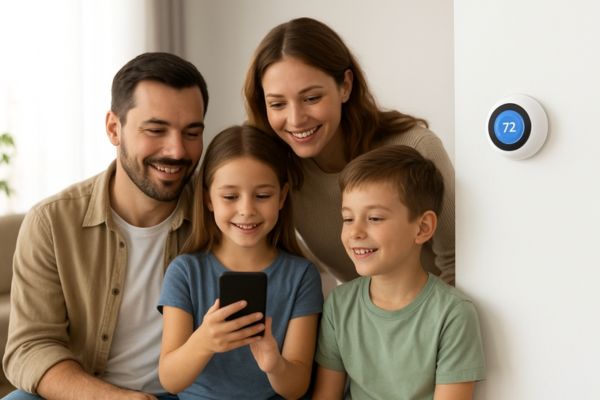
Modern homeowners are now prioritizing smart home energy efficiency to reduce waste and improve everyday comfort. There’s something quietly powerful about walking into a home that feels alive one that adjusts the lights when the sun sets, lowers the blinds when it gets too warm, and keeps your rooms comfortable without you even thinking about it. That’s the beauty of a smart home built around energy efficiency.
In 2026, the idea of saving energy has gone far beyond switching off lights or unplugging chargers. Today, it’s about smart energy management a blend of intelligent devices, automation, and awareness that lets you live more comfortably while using less power.
A smart home doesn’t just make life easier; it makes it smarter in the truest sense. With the right setup, your home learns your habits when you wake up, when you leave for work, how you like your room temperature and adjusts automatically. The result? Lower energy bills, less waste, and a smaller carbon footprint without sacrificing comfort.
This guide will walk you through everything you need to know about smart home energy efficiency from the basics of smart thermostats and plugs to the latest energy-saving systems that are transforming modern living. Whether you’re just starting out or looking to upgrade your setup, you’ll find simple explanations, practical tips, and a few “aha” moments along the way.
Ready to see how small changes can make your home and your life more efficient? Let’s start with why smart energy management matters more than ever.
Why Smart Home Energy Efficiency Matters
One of the biggest advantages of smart home energy efficiency is the ability to automate savings without sacrificing convenience. Energy efficiency isn’t just about lowering your electricity bill anymore it’s about creating a home that works with you, not against you. As technology evolves, our homes are becoming more aware, more responsive, and more capable of managing energy without constant input.
Let’s look at why that shift matters, especially now.
The Rising Cost of Energy in 2026
If you’ve glanced at your electricity bill lately, you’ve probably noticed it’s not what it used to be. Across many regions, energy prices in 2025 continue to climb driven by demand, supply issues, and the push for cleaner production.
That means every wasted kilowatt-hour now costs more than ever. But here’s the thing: you don’t have to keep paying for inefficiency. Smart devices like thermostats, plugs, and lights are designed to help you monitor and reduce unnecessary energy use automatically.
Imagine your heater turning off the moment you leave the house or your lights dimming when there’s enough daylight. Those small, invisible moments of control add up to meaningful savings over time often cutting annual energy costs by 10–30% depending on your setup.
How Smart Homes Are Redefining Energy Efficiency
Traditional energy saving relied on habits remembering to turn things off, adjusting thermostats, and tracking usage manually. Smart homes change that completely.
By combining sensors, automation, and AI learning, your home can think ahead for you. It knows when rooms are empty, detects when devices are on standby, and optimizes heating or cooling in real-time.
For example, a smart thermostat doesn’t just follow a timer it learns your lifestyle. It might lower the temperature when you’re asleep or warm up your living room just before you get home from work. Smart plugs cut off idle devices that quietly drain power. Lighting systems adjust brightness based on the time of day.
This isn’t just convenience it’s efficiency built into your daily rhythm.
Environmental Benefits of Energy Saving Tech
Beyond the personal savings, smart energy management has a bigger purpose helping the planet breathe a little easier. Every watt you save means fewer fossil fuels burned and less strain on the grid.
A single household may not change the world overnight, but imagine millions of homes working together automatically adjusting, conserving, and balancing demand. That’s the collective power of smart energy systems: a sustainable, tech-driven way to reduce carbon emissions without asking people to sacrifice comfort or convenience.
Smart homes are not just “modern” anymore; they’re becoming the foundation of sustainable living where innovation meets responsibility.
Understanding Smart Energy Devices
Before diving into routines and automation, it helps to understand what makes a smart home “smart” when it comes to saving energy. At its core, it’s all about devices that talk to each other sharing data, responding to your habits, and adjusting automatically to reduce waste.
From thermostats that learn your schedule to lighting systems that sense when you’re in the room, these devices form the backbone of an energy-efficient smart home. Let’s break down how each of them works and why they matter.
Smart Thermostats: The Brain of Energy Management
If your home’s heating and cooling system were a body, the thermostat would be its brain. But a smart thermostat goes far beyond simple temperature control it’s designed to learn, adapt, and optimize.
Think of it like this: instead of setting a static schedule, your thermostat studies your behavior. It notices when you wake up, when you leave for work, and when you usually return. Over time, it automatically adjusts to maintain comfort while minimizing unnecessary energy use.
The result? You stay cozy without wasting power. Plus, many smart thermostats provide detailed energy reports, showing how much you’re saving and suggesting new ways to improve efficiency.
Some of the most popular options, like Google Nest and Ecobee, even use geofencing meaning they detect when your phone leaves home and switch to energy-saving mode automatically. It’s a small touch that adds up to real savings.
Smart Plugs: Small Devices, Big Savings
They might look simple, but smart plugs can have a surprisingly big impact. These little adapters let you control traditional appliances from your phone turning them on or off remotely, scheduling when they run, or cutting off power completely when they’re not in use.
Ever left the iron or coffee maker plugged in all day? A smart plug can fix that. Beyond convenience, they also help you track how much electricity each device consumes, letting you identify which ones quietly eat up power even when idle.
Over time, using smart plugs across your home can noticeably reduce your monthly bill especially when paired with energy monitoring apps.
Smart Lighting 101: Bright Ideas for Efficiency
Lighting might seem like a small part of your energy bill, but it’s one of the easiest areas to optimize. Smart bulbs and lighting systems let you adjust brightness, set schedules, or even change color temperature automatically based on time of day.
Imagine your living room lights dimming softly as evening sets in, or turning off when you walk out of a room. These changes feel effortless yet they make a real difference in long-term energy use.
Many systems, such as Philips Hue or Nanoleaf, also integrate with voice assistants like Alexa or Google Home. You can literally say, “Turn off the lights,” and it’s done saving energy without lifting a finger.
Energy Monitoring Devices: Explained
If you’ve ever wondered where your electricity really goes each month, energy monitoring systems give you the answers. These devices track your home’s total consumption in real time sometimes even down to the individual appliance.
They connect to your smartphone or dashboard app, giving you visual insights into usage patterns. You can spot which rooms or gadgets use the most energy, set goals, and get alerts when consumption spikes.
Think of it as a personal energy coach always keeping an eye on where you can save more. When combined with smart plugs, lighting, and thermostats, monitoring systems turn data into action, helping you build a truly efficient home ecosystem.
Smart energy devices aren’t just cool tech they’re tools that give you control with smart locks, awareness, and savings all at once. And the best part? Once set up, they work quietly in the background, improving your home’s efficiency day by day.
How Automation Saves Energy Without Effort
One of the biggest advantages of a smart home is that it doesn’t rely on you remembering to turn things off or adjust settings. Once you set up automation, your home starts managing energy on its own quietly, consistently, and efficiently.
Instead of constant manual control, you create routines that respond to time, activity, or even your location. Here’s how it works in real life.
Setting Routines and Schedules
Automation routines are the heart of energy-efficient living. You can schedule devices to work only when needed, so nothing runs unnecessarily.
Examples include:
- 🕕 Morning Routine:
- Lights gradually brighten to mimic sunrise.
- The thermostat warms the house 10 minutes before you wake up.
- The coffee machine turns on automatically via a smart plug.
- 🌇 Evening Routine:
- Lights dim automatically after sunset.
- Your smart blinds close to retain heat.
- The thermostat lowers the temperature for better sleep.
- 🚶♀️ Away Mode:
- All lights and non essential appliances switch off when you leave.
- Smart plugs cut power to standby devices (TV, charger, etc.).
- The system shifts into “eco” mode to conserve electricity.
These routines not only save time but also ensure you’re never wasting power on autopilot.
Integrating with Voice Assistants
Voice assistants make energy control as easy as speaking a sentence. Whether you use Alexa, Google Assistant, or Apple HomeKit, you can instantly command your home to adjust without touching a single switch.
Some handy examples:
- “Alexa, turn off all the lights.”
- “Hey Google, lower the thermostat to 23 degrees.”
- “Siri, activate bedtime mode.”
Voice integration also makes automation accessible perfect for families, seniors, or anyone who wants effortless control. It’s the kind of convenience that saves energy and makes your home feel futuristic.
Using Sensors for Automatic Adjustments
💡 Cross-Link: “Smart Routines: Automating Your Morning & Evening” (Comfort & Lifestyle pillar)
Sensors are where smart homes truly shine. They allow your system to react to the environment in real time no manual input required.
Common sensor-based automations include:
- 🔦 Motion Sensors: Lights turn on when you enter a room and off when you leave.
- 🌡️ Temperature Sensors: Adjust HVAC systems based on actual room temperature, not just preset schedules.
- 🌤️ Light Sensors: Dim or brighten bulbs automatically depending on daylight levels.
- 🚪 Door & Window Sensors: Pause heating or cooling if a window is open too long.
Together, these sensors create a responsive home that wastes less energy without you even noticing it.
💡 Pro Tip: Combine and Layer Automations
For best results, combine multiple triggers.
Example:
“If motion is detected and it’s after 6 PM, turn on the hallway lights at 50% brightness.”
This layered logic known as conditional automation gives you ultimate control while keeping your energy use tight and optimized.
Automation isn’t just about convenience, it’s about turning efficiency into a lifestyle. Once you’ve set it up, your home quietly takes care of energy management giving you comfort, savings, and peace of mind all at once.
Tracking and Optimizing Energy Usage
Knowing how much energy your home consumes is the first step toward cutting waste. Thanks to smart home technology, you can now see your electricity usage in real time right down to which device is costing you the most. Real time monitoring plays a major role in improving smart home energy efficiency across every room in the house.
This isn’t just about numbers on a screen. It’s about turning those insights into meaningful changes that save money and make your home greener.
Benefits of Real Time Energy Data
Having access to live data changes how you interact with your home. Instead of guessing where your electricity goes, you can pinpoint exactly what’s driving your bills.
Here’s why real-time monitoring matters:
- 📊 Instant Awareness: You’ll know immediately when your energy spikes — no more surprises on monthly bills.
- ⚡ Smarter Decision Making: You can compare usage patterns across days, weeks, or months.
- 💡 Identify Energy Hogs: Spot inefficient devices that quietly drain power even when idle.
- 🌱 Encourages Conscious Habits: Seeing your progress in real time keeps you motivated to stay energy-smart.
Think of it as a feedback loop the more data you have, the better your home learns how to use energy efficiently.
Apps & Dashboards That Help You Save
Most smart energy systems come with apps or online dashboards that visualize your power usage beautifully through charts, graphs, and daily summaries.
Some of the most popular tools include:
- Sense Energy Monitor App Breaks down your home’s energy use by device in real time.
- Emporia Energy App Offers custom alerts when usage crosses your set limit.
- Google Home Energy Dashboard Shows energy data across your connected devices in one place.
- Ecobee Home IQ Displays HVAC performance, savings reports, and personalized recommendations.
With these apps, you can:
✅ Compare hourly, daily, or monthly usage.
✅ Get push notifications for abnormal consumption.
✅ Automate “eco modes” when usage peaks.
Comparing Energy Usage by Device
💡 Internal Link: “Automating Energy Savings with Smart Routines”
To understand where savings come from, it helps to visualize your typical energy breakdown. Here’s a simplified example of average daily energy consumption for a standard home and what automation can do to reduce it:
| Device / System | Average Daily Use | After Smart Automation | Potential Savings |
| Heating & Cooling (HVAC) | 45% of total | 30–35% | 🔻 20–25% less |
| Lighting | 12% of total | 7–8% | 🔻 30–40% less |
| Appliances & Kitchen Gear | 20% of total | 15% | 🔻 10–20% less |
| Standby / Vampire Devices | 10% of total | 3–5% | 🔻 50–70% less |
| Electronics (TVs, PCs, etc.) | 13% of total | 10% | 🔻 10–15% less |
💬 Note: These numbers are estimates actual savings depend on your home’s size, location, and habits. But they show how much impact smart devices can really have.
Smart Appliances That Cut Energy Costs
Here’s how you can use what you learn from monitoring tools to optimize your daily routine:
- 🔌 Schedule heavy-use appliances (like washing machines) during off-peak hours.
- 🌡️ Set thermostat zones only heat or cool the rooms you actually use.
- 🌙 Use “night mode” for lighting and electronics to cut power draw while you sleep.
- 📲 Review weekly reports many apps send summaries with suggested adjustments.
- ⚙️ Automate adjustments through IFTTT or your smart home hub to handle savings automatically.
With time, these small tweaks can make a noticeable difference not just for your wallet, but also for the planet.
Smart energy tracking isn’t about micromanaging your home; it’s about empowering you with clarity. Once you can see where your energy goes, optimization becomes second nature and your home evolves into a truly intelligent ecosystem.
Smart Appliances That Cut Energy Costs
Smart home energy efficiency doesn’t stop with thermostats or lighting. The real game-changer happens when your appliances join the conversation literally communicating with each other to use energy more wisely.
From your refrigerator to your washing machine, smart appliances can optimize their performance automatically, helping you live comfortably without wasting power.
Smart Refrigerators, Washers, and Climate Control
Modern appliances are no longer just “on” or “off.” They learn your patterns, respond to your habits, and often connect to cloud-based systems for updates. Here’s how some of them help reduce your electricity bills:
- 🧊 Smart Refrigerators: Adjust cooling cycles based on usage. They enter energy-saving mode when doors aren’t opened frequently.
- 🧺 Smart Washers & Dryers: Detect load size, soil level, and water temperature, adjusting wash cycles for efficiency.
- ❄️ Smart Climate Systems (AC & Heaters): Use sensors and geofencing to cool or heat only when someone’s home.
- 🍽️ Smart Dishwashers: Schedule cycles for off-peak hours automatically when electricity costs less.
These appliances balance comfort with sustainability doing more while using less.
How Smart Devices Communicate to Reduce Waste
What makes a smart home ecosystem efficient is how its devices talk to one another.
For example:
- When your thermostat detects you’re away, it can signal your smart plugs and appliances to power down.
- Your washing machine can delay its start time based on your energy provider’s low-rate schedule.
- A smart hub or AI system (like Samsung SmartThings or Google Home) coordinates these actions seamlessly.
This kind of device to device communication prevents waste before it happens no manual effort required.
When to Upgrade to Energy Star + Smart Combo
If your current appliances are more than 8-10 years old, it may be time to upgrade. Look for models that combine Energy Star certification with smart connectivity.
Here’s why:
| Feature | Energy Star Only | Smart + Energy Star |
| Energy Efficiency | High | Very High |
| Remote Control | ❌ No | ✅ Yes |
| Real-Time Monitoring | ❌ No | ✅ Yes |
| Automation Support | ❌ No | ✅ Yes |
| Long-Term Savings | Moderate | Excellent |
💡 Pro tip: A smart Energy Star appliance may cost more upfront, but the savings on your electric bill often pay for the difference within 1-2 years.
Eco Friendly Energy Solutions for Smart Homes
A truly sustainable home doesn’t just consume energy wisely it also produces and stores it efficiently. Let’s explore how smart technology works hand-in-hand with renewable energy.
Solar Powered Smart Devices
Solar-powered gadgets are one of the easiest ways to combine clean energy and automation.
Popular examples include:
- 🌞 Solar smart cameras that recharge automatically during the day.
- 💡 Solar outdoor lighting that adjusts brightness at night.
- 🔋 Solar power banks or panels that keep smart hubs running during outages.
With these, you reduce reliance on the grid while ensuring your smart ecosystem never runs out of juice.
Smart EV Chargers & Renewable Integrations
Electric vehicles (EVs) are now part of the energy equation. A smart EV charger doesn’t just power your car it syncs with your home’s system to charge during off-peak hours or when your solar panels are producing surplus energy.
Some advanced systems can even perform bi directional charging, meaning your EV can feed power back to your home in case of outages. That’s efficiency on a whole new level.
Battery Systems and Smart Generators
To complete the loop, smart battery storage systems (like Tesla Powerwall or EcoFlow Delta) store excess solar energy and release it when needed. They can:
- Detect peak demand hours and switch to battery power automatically.
- Balance load between devices for optimal usage.
- Provide backup energy during blackouts without interruption.
When paired with solar, they turn your home into a mini energy ecosystem self-sufficient, resilient, and sustainable.
Best Smart Energy Devices for 2025
Smart home energy efficiency doesn’t stop with thermostats or lighting. The real game-changer happens when your appliances join the conversation literally communicating with each other to use energy more wisely. The best products for smart home energy efficiency combine automation, monitoring, and low power consumption
If you’re just starting to build your energy-efficient home, these are the top-rated devices worth considering this year:
| Category | Recommended Device | Key Benefit |
| 🧠 Smart Thermostat | Google Nest Learning Thermostat | Learns habits, adjusts automatically |
| 🔌 Smart Plug | TP-Link Kasa Smart Plug HS300 | Cuts standby power waste |
| 💡 Smart Lighting | Philips Hue Starter Kit | Customizable lighting + automation |
| ⚡ Energy Monitor | Emporia Vue 2 | Tracks energy by circuit or device |
| 🌞 Smart Solar Kit | EcoFlow PowerStream | Integrates solar and battery seamlessly |
Each of these devices can work alone but when combined, they create an intelligent network that transforms your home’s efficiency.
Product Reviews & Recommendations
To help you decide which device fits best, here’s a quick look at some of the most popular models:
- 🔹 Nest Learning Thermostat
- Learns your temperature preferences.
- Saves up to 20% on heating/cooling costs.
- Sleek design + easy app control.
- 🔹 Ecobee SmartThermostat
- Includes room sensors for precise control.
- Supports voice commands and multi zone heating.
- Great for large homes or families.
- 🔹 Philips Hue Smart Bulbs
- Offers millions of color tones and schedules.
- Syncs with music, movies, and routines.
- Ideal for both ambiance and energy savings.
- 🔹 TP Link Kasa Smart Plug
- Budget friendly, reliable, and simple to set up.
- Monitors usage and automates power schedules.
These products aren’t just trendy gadgets they represent the shift toward living smarter, not harder.
DIY vs Professional Energy Optimization
Should you set up your smart energy system yourself, or hire an expert? The answer depends on your comfort level with tech and your home’s size.
🔧 DIY Setup
- Affordable and flexible.
- Perfect for apartments or small homes.
- Step by step setup via app (most systems take <30 mins).
- Great learning experience for beginners.
🧠 Professional Consultation
- Ideal for large homes or solar integration.
- Technicians can design complex automations and wiring.
- Often includes energy audits and ROI estimates.
| Option | Upfront Cost | Ease of Setup | Long-Term Efficiency | Best For |
| DIY | Low | Easy | Moderate | Beginners & renters |
| Professional | Medium–High | Complex | Excellent | Homeowners & solar setups |
💬 Tip: Start DIY for simple devices like smart plugs or lights. Once you’re confident, bring in pros for full-system automation or solar integration.
FAQs: Smart Energy & Efficiency
Conclusion: Smarter Energy, Smarter Living
Investing in smart home energy efficiency is one of the smartest ways to reduce bills while creating a modern, eco-friendly home. Creating an energy efficient smart home isn’t about having the latest gadgets it’s about living consciously, comfortably, and sustainably.
Every small upgrade from installing a smart plug to setting an automated routine moves you closer to a home that works for you and for the planet.
Start small. Maybe it’s a smart thermostat this month or solar-powered outdoor lights next. Over time, your home will quietly transform into a place that saves money, conserves energy, and adapts beautifully to your life.
💡 Start today: Pick one smart energy device, set it up, and watch your comfort rise while your bills (and your carbon footprint) fall.