
The modern smart home is powered not just by devices but by the invisible web that connects them. From Wi-Fi networks and smart hubs to protocols like Matter and Zigbee, connectivity is the foundation that keeps everything in sync. Without reliable control and communication, even the smartest gadgets can feel disconnected.
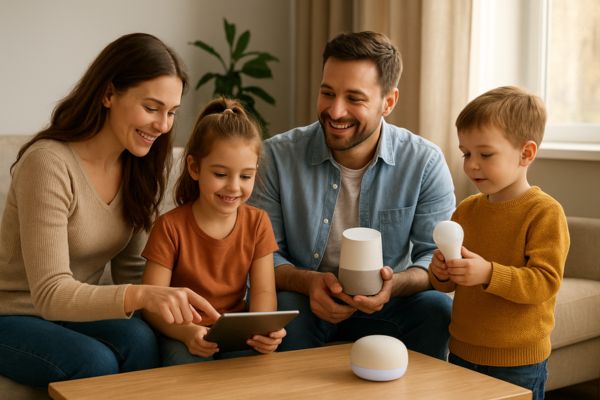
This guide will help you understand how smart home connectivity and control systems work, how to build a seamless network, and which technologies can future-proof your setup in 2025 and beyond.
Why Connectivity Is the Heart of Every Smart Home

In every smart home, connectivity is the unseen force that drives automation. It’s the “nervous system” that lets your devices communicate, respond, and work together efficiently. Whether it’s your lights turning off when you leave or your thermostat adjusting based on the weather, it all depends on reliable connections.
How Smart Connections Power Everyday Automation
Smart home automation relies on device communication when one action triggers another. For example:
- Your motion sensor sends a signal to the lights when it detects movement.
- Your smart lock notifies your camera to record when someone arrives.
- Your thermostat adjusts based on occupancy or time of day.
Behind every seamless experience lies a communication protocol Wi-Fi, Zigbee, Z-Wave, or the emerging Matter standard ensuring devices “speak the same language.”
The Main Smart Home Communication Standards You Should Know
Today’s smart homes use multiple standards to communicate. The most common include:
- Wi-Fi – Fast and familiar, ideal for high-bandwidth devices.
- Zigbee & Z-Wave – Efficient, low-power mesh networks for sensors and switches.
- Matter – A new open-source protocol promising universal compatibility.
- Bluetooth & Thread – Often used for device pairing and short-range control.
Each has strengths and trade-offs, which we’ll explore in detail later.
Why Compatibility Matters More Than Ever in 2025
In 2026, smart home ecosystems are more diverse than ever. Some brands still rely on proprietary systems, while others embrace cross-platform standards like Matter. Choosing compatible devices ensures:
- Seamless automation
- Fewer app conflicts
- Easier voice assistant integration (Alexa, Google, Siri)
Understanding Smart Home Communication Protocols
Let’s dive deeper into how your smart home devices actually communicate.
WiFi The Default Option That Does It All (But Needs More Power)
WiFi connects most smart home devices from speakers and cameras to TVs. It’s powerful but can become congested with too many connected gadgets.
Pros
- Fast and familiar
- Wide compatibility
Cons
- High power use
- Network interference
- Can slow down if overloaded
Best for: Cameras, smart TVs, streaming devices, and voice assistants.
Zigbee & Z-Wave – Reliable Networks Built for Smart Devices
These two protocols form the backbone of many home automation systems. They use mesh networking, meaning each device extends the signal range by passing it to the next.
Zigbee
- Operates on 2.4GHz
- Used by brands like Philips Hue and Amazon Echo
- Supports thousands of devices
Z-Wave
- Uses 900MHz band (less interference)
- Great for stability and long-range control
- Compatible with platforms like Hubitat and SmartThings
Best for: Sensors, switches, plugs, and locks that don’t require high bandwidth.
Matter: The Game Changing Standard for True Compatibility
Matter is the new open standard backed by Apple, Google, Amazon, and others. It promises to eliminate compatibility issues once and for all.
Key Benefits:
- Works across all major ecosystems
- Secure, local control (less cloud reliance)
- Easier setup through QR pairing
Best for: Homeowners who want flexibility and future-proofing.
Bluetooth & Thread: Quiet Helpers Behind the Scenes
Bluetooth Low Energy (BLE) helps devices pair quickly, while Thread builds low-power mesh networks that complement Wi-Fi and Matter.
Bluetooth:
- Perfect for short-range setup or direct control
- Low power consumption
Thread:
- Self-healing, fast mesh protocol
- Core part of the Matter standard
Together, they create a more resilient network backbone for next-gen smart homes.
Smart Home Hubs Explained

Smart home hubs are like translators they connect different devices and protocols so everything can work together seamlessly. Whether you use Alexa, SmartThings, or Hubitat, the hub acts as the brain that coordinates your home’s automation.
What a Smart Hub Actually Does (and Why It Matters)
Think of your smart hub as the command center of your connected home.
Here’s what it does:
- Bridges communication protocols (like Wi-Fi, Zigbee, and Z-Wave)
- Runs automation rules locally, reducing lag
- Maintains connectivity even if your internet goes down
For example, if you tell Alexa to turn on your Zigbee bulbs, the hub interprets the command, ensuring instant and reliable action.
Hub vs Hubless Smart Homes Which Setup Fits You Best?
In 2026, more devices are “hubless,” connecting directly to Wi-Fi or cloud platforms. Both setups have pros and cons:
| Setup | Pros | Cons |
| Hub-Based | Reliable, low latency, local control | Higher cost, extra setup |
| Hubless | Easier setup, fewer devices | Depends on Wi-Fi/cloud, potential lag |
If you’re building a larger ecosystem with mixed brands, a hub remains the better long-term investment.
Centralizing Your Devices with SmartThings, Hubitat, and More
Here are some of the top hub choices in 2025:
- Samsung SmartThings Hub (2025 edition)
Reliable and beginner-friendly, now with full Matter support and Zigbee 3.0 compatibility. - Hubitat Elevation C-8
Ideal for enthusiasts. Offers local processing, privacy, and deep automation control. - Aeotec Smart Hub
A compact alternative for SmartThings users, supporting Wi-Fi, Zigbee, and Z-Wave. - Amazon Echo Hub (2025)
Doubles as both Alexa device and smart home hub great for voice first households.
The Best Smart Home Apps to Stay in Control
Beyond hardware, apps are your window into the smart home. They let you monitor, manage, and automate everything from one place.
Manage All Your Devices from One App (Yes, It’s Possible)
Modern ecosystems now allow multi-brand management through a single dashboard. Apps like SmartThings, Google Home, or Apple Home act as central control panels — no need to switch between multiple apps.
Features to look for:
- Unified control for all connected devices
- Room-based organization
- Voice assistant integration
- Remote access outside home Wi-Fi
Apple Home vs Google Home vs Alexa — Which App Wins in 2025?
Each ecosystem shines differently:
- Apple Home (HomeKit):
Private, secure, and polished great for iPhone users. - Google Home:
Visually intuitive and powerful for mixed-brand Google Home setups. - Alexa App:
Ideal for automation using routines and voice control.
If you’re deep into a single ecosystem, stay within it for the smoothest experience. Otherwise, Matter makes cross-ecosystem setup easier than ever.
Automate Smarter with IFTTT and Custom Triggers
For advanced automations, IFTTT (If This Then That) connects apps and devices that don’t natively talk to each other.
Example triggers:
- Turn on your lights when your GPS detects you’re near home.
- Mute your phone when a meeting starts on Google Calendar.
- Turn off the air purifier when the window sensor detects it’s open.
Building a Seamless Smart Home Network
(Image prompt: 600×400 px, modern home Wi-Fi mesh setup with family using multiple devices — no text.)
A strong network is the backbone of your smart home. Without stable Wi-Fi or mesh coverage, your devices won’t respond reliably — no matter how advanced they are.
Best Mesh Wi-Fi Systems for a Lag-Free Smart Home
Mesh systems are game changers. Instead of relying on a single router, they use multiple nodes to blanket your home with Wi-Fi coverage.
Top Picks for 2025:
- Google Nest Wi-Fi Pro (Wi-Fi 6E): Great balance between speed and simplicity.
- TP-Link Deco BE95: Future-ready with Wi-Fi 7 support.
- Eero Max 7: Excellent reliability for Alexa ecosystems.
Benefits of Mesh Systems:
- Reduce dead zones
- Keep smart devices online
- Improve latency for automation
How to Fix Devices That Refuse to Connect
If some devices won’t connect, try this quick checklist:
- Ensure your 2.4GHz network is active (many devices can’t use 5GHz).
- Check DHCP settings your router may be maxed out.
- Keep devices within Wi-Fi or hub range.
- Restart routers or hubs after adding new devices.
- Update firmware regularly.
Expanding Your Coverage and Reducing Network Delays
If your network feels slow:
- Upgrade to Wi-Fi 6 or 7 routers for better bandwidth.
- Use Ethernet backhaul to stabilize mesh nodes.
- Avoid overcrowding your main router with 50+ IoT devices.
- Consider dedicated IoT networks to offload traffic.
💡 Top Brand of Keyless Entry Locks Revealed
Smart Voice Assistants & AI Control Systems
In 2026, voice assistants and AI-driven control systems have become the central interface of the smart home experience. They’re no longer just tools for turning on lights or playing music they now understand routines, predict preferences, and automate daily comfort.
This section explores how Alexa, Google Assistant, and Siri have evolved to power the next generation of intuitive, AI-enhanced smart homes.
How Voice Control Transformed Smart Home Interaction
Voice assistants eliminate the need to open apps or press switches. You simply speak, and your home responds.
“Alexa, turn off the kitchen lights.”
“Hey Google, lock the front door.”
“Hey Siri, set the thermostat to 23°C.”
These short commands make smart home management hands-free, accessible, and instant perfect for busy mornings or when your hands are full.
But the real transformation lies in context awareness. AI systems now learn your patterns:
- Adjusting lighting based on the time of day
- Lowering temperature when you’re asleep
- Suggesting energy-saving routines automatically
In short, your home begins to understand you.
The Leading Smart Assistants in 2026
Let’s look at how today’s top smart voice assistants compare:
| Assistant | Ecosystem | Key Strengths | Ideal For |
| Amazon Alexa | Works with Echo devices, Fire TV, and thousands of brands | Best third-party compatibility, customizable routines, visual dashboard (Echo Hub) | Power users and multi-device households |
| Google Assistant | Integrated into Google Home, Nest, and Android | Smart context understanding, accurate voice recognition, seamless with Google services | Families and Android users |
| Apple Siri (HomeKit) | Tied to HomePod mini, iPhone, and Apple ecosystem | Superior privacy, fast Thread performance, tight ecosystem integration | Apple users and privacy-conscious households |
💡 Pro Tip: Choose your voice assistant based on your existing devices. Mixing ecosystems often leads to duplicate automations and inconsistent performance.
AI Personalization and Predictive Control
Smart home AI has evolved far beyond simple voice recognition. In 2026, systems analyze habits, sensor data, and environmental factors to optimize comfort and efficiency.
Examples of AI-driven automation:
- Detects when everyone leaves the house → turns off unnecessary devices.
- Adjusts blinds and lighting according to sunlight and room temperature.
- Suggests new automations (“Would you like to set a morning routine for weekdays?”).
This predictive approach turns automation from reactive to proactive your home anticipates needs instead of waiting for commands.
Integrating Voice Assistants Across Multiple Devices
For best performance, ensure your assistant has “ears” in key rooms.
Best placement for smart speakers/displays:
- Living room (main control center)
- Kitchen (for timers, music, and lighting control)
- Bedroom (for routines, alarms, and climate control)
- Entryway (for smart lock and security control)
You can also use multi room control, allowing all speakers to sync for music, announcements, or alerts.
AI Control Beyond Voice: Smart Displays and Gesture Commands
Smart displays (like Echo Show, Google Nest Hub, and HomePod with display) now add visual control — perfect for viewing security feeds, adjusting thermostats, or checking who’s at the door.
Meanwhile, gesture control and presence detection are on the rise:
- Wave to pause music.
- Walk into a room to trigger preferred lighting.
- Automatic detection when you leave turning everything off.
These innovations make homes more intuitive, bridging the gap between technology and natural human interaction.
The Future of AI in Smart Homes
Looking ahead, AI powered smart homes will move from “command and control” to full contextual understanding. Expect features like:
- Emotion recognition from tone or movement.
- Predictive maintenance alerts (before something breaks).
- Hyper-personalized comfort based on biometrics or schedules.
It’s not about more devices it’s about smarter coordination. The AI layer becomes the “conductor,” orchestrating every device toward efficiency, security, and ease.